From Still to Motion: The Rise of AI Image-to-Video Converters
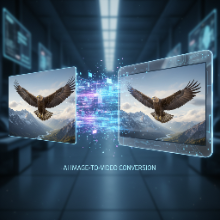
Just when we thought AI text-to-image generation was the peak of creative technology, the next revolution has arrived: image-to-video conversion. A new wave of AI models can now take a single static image and bring it to life, generating short, dynamic video clips with stunning realism and creativity. This technology is poised to change everything from social media content to filmmaking.
What is an AI Image-to-Video Converter?
An AI image-to-video converter is a tool that uses generative artificial intelligence to animate a still photograph or piece of art. You provide an image, and sometimes a text prompt describing the desired motion, and the AI model generates a video. It doesn't just apply a simple looping effect; it intelligently interprets the objects in the scene and animates them in a physically plausible and contextually aware manner.
For example, given a photo of a waterfall, the AI can make the water cascade realistically. Given a portrait, it might make the person's hair and clothes sway gently in a breeze it imagines.
How Does It Work?
The technology is incredibly complex, building on the same principles as AI image generators. These models are trained on an enormous dataset of videos and have learned the "grammar" of motion. They understand how objects typically move and interact with their environment.
When you provide an image, the AI analyzes its content and then predicts a sequence of future frames. It "dreams up" what would happen next, generating each new frame to create a fluid video clip. This process, often involving diffusion models, allows for the creation of entirely new motion that wasn't present in the original image.
The Creative Potential
The applications for this technology are vast and exciting:
- Dynamic Social Media Content: Imagine turning your best photos into eye-catching video posts for Instagram or TikTok, instantly grabbing more attention.
- Bringing Art to Life: Digital artists can now add a layer of motion to their creations, making characters blink or environments shift.
- Marketing and Advertising: Businesses can create simple, engaging product animations from static catalog images without the need for expensive video shoots or complex animation software.
- Conceptual Storyboarding: Filmmakers and game designers can quickly visualize scenes by generating short clips from concept art.
The Future is in Motion
Image-to-video AI is still in its early stages, but it is developing at an astonishing pace. As the models become more sophisticated and accessible, they will undoubtedly become a standard tool in the creator's toolkit. This technology represents a monumental leap forward, blurring the lines between static images and dynamic video and opening up a new dimension of digital creativity.